

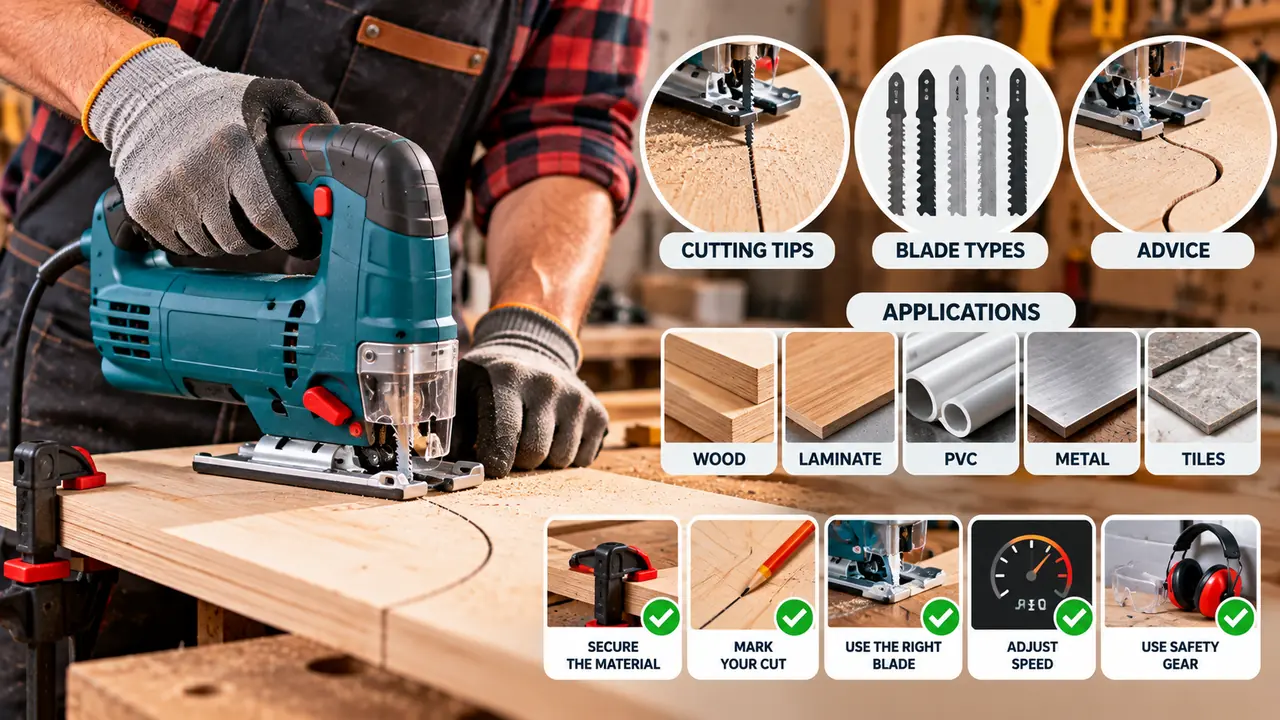
Power tools, jig saw machine
A jigsaw machine is a power tool that efficiently and effectively always to create intricate, irregular shapes from wood. It can be used with equal ease to cut a variety of materials such as wood, metal and tile.
The jigsaw obtains its versatility from the movement of the blade. Many jigsaws use two types of blade movements, straight and orbital. The orbital action is more aggressive and provides a quick though less smoother cut than the straight action.
The shoe is what the jigsaw machine’s base is known as. It’s purpose is to rest on the material being cut. This is responsible for keeping the saw at the preferred angle. The shoe and the blade are at a right angle for a straight cut. To tilt the blade of the saw as required for cutting, the angle of the shoe can be adjusted.
Here are some suggestions to make the best of a jigsaw machine:
Choose the right work place:
Choose a ventilated area to work in so there is minimum discomfort due to dust. Some jigsaw models come with their own dust collector. A good quality mask and goggles gives the right protection from dust while working.
Surface preparation:
Before starting the cutting process, it is best to raise the workpiece with wooden blocks. This allows space to make a complete cut. The work piece can be secured with the help of clamps to prevent any unnecessary movement.
Teeth per Inch (TPI):
The cutting teeth present on the blade are measured as Teeth per Inch (TPI). The higher the TPI, the smoother the cut. Blades with less TPI give faster results but the cut edge may be rough and require more sanding.
While multi purpose blades are common, it is better to use specially designed blades for best results with different materials such as metal, glass, plastic and ceramics.
Mark the surface:
Once the surface is prepared and the jigsaw blade identified for the job at hand, it is important to mark the surface. A tape measure and a marking square will be handy to do so.
If the material being cut, chips easily, then place a painter’s tape on the marked lines and cut through the tape. This is useful to minimise chipping. Similarly, if the jigsaw blade uses an upward motion for cutting, then mark and cut on the wrong side of the surface for a smoother finish.
Cutting the surface:
For safety, unplug the jigsaw or take off the batteries and attach the blade. Once the blade is securely attached, plug the jigsaw in or insert the batteries. Next, place the shoe of the jigsaw near the cutting line. Pull the trigger with the blade positioned near the
cutting line. Once the saw attains full speed, then start cutting.
Place the saw shoe close to the cutting line and on the material’s edge. With the blade next to but not touching the material, pull the trigger. Allow the saw to reach full speed before you begin to move it. The saw needs to be moved lightly. Attempting to force the saw can overheat and damage the blade.
Similarly, a jigsaw can be used to cut a variety of shapes and curves.
Maintaining the jigsaw:
As part of a maintenance routine, check the cord of the jigsaw for corded models regularly. Replace any cracked or frayed cords. Similarly, before installing the blades check for damage. Blades with damaged teeth or that are bent or crooked need to be replaced.
After each use, wipe the saw with a cleaning fabric. Brush away any dust clinging to the saw.
Check that the batteries are properly charged and the type of batteries is complaint with manufacturer’s guidance.

 English