

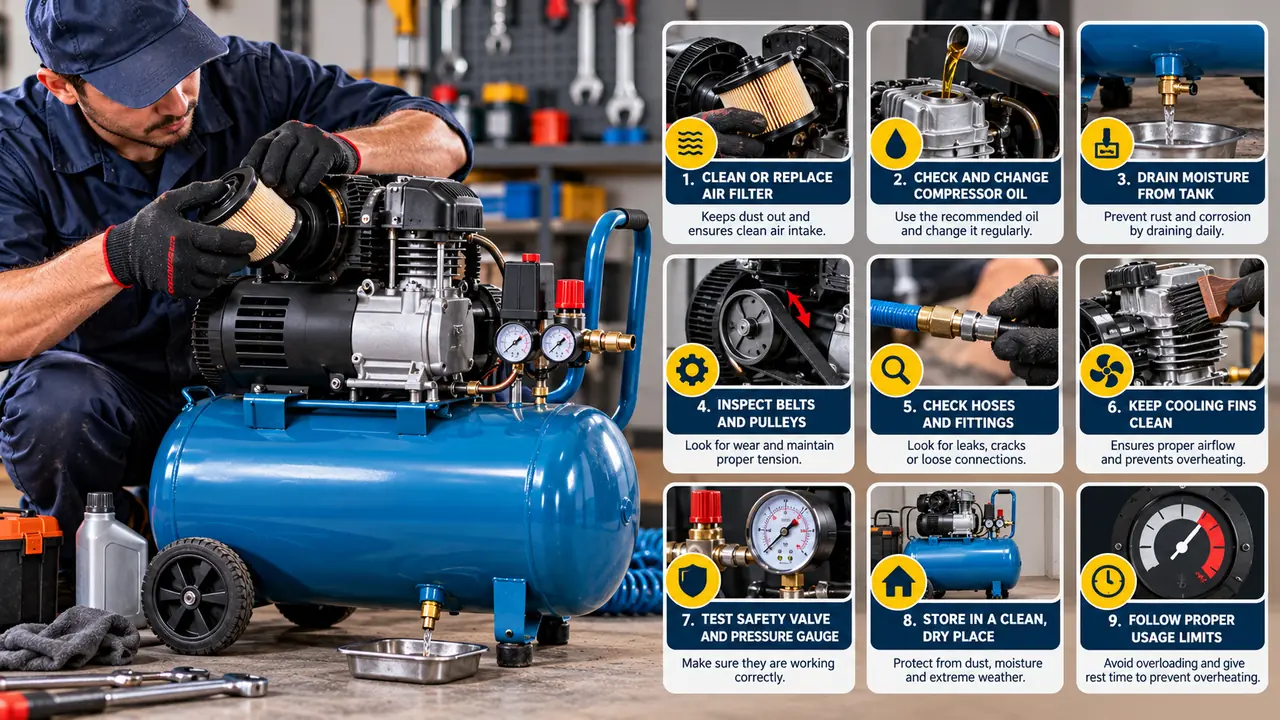
An air compressor is a power tool that absorbs ambient air and discharges it at high pressure. Air compressors find use in mining and drilling operations, for supplying air at moderate pressure to other tools and systems, in cement plants and other industrial applications. They are also used to fill gas cylinders with clean air.
Since it is a specialised piece of equipment, proper maintenance is essential to get optimal performance over time. Annual maintenance support keeps the air compressor in good condition. Additionally, regular daily and monthly servicing between annual maintenance schedules should keep an air compressor in robust condition for best performance.
Maintaining the air compressor with rigour and care will also cut sudden repair costs and promote savings.
Here are some important tips crucial for regular maintenance:
Keep the air compressor dry
Accumulation of moisture causes corrosion of internal parts. To prevent corrosion, the air compressor should be kept dry. Any moisture should be drained off completely from the compressor after every use.
Prevent air leaks
It is a good practice to check the fittings, valves and hose connections for any leak and to fix the leak immediately. The smallest leak leads to additional workload on the motor to keep the performance high. A quick test with soapy water can help to detect the smallest leak due to the presence of bubbles.
Replace air filters
Air filters gather dirt and restrict airflow thereby reducing efficiency. It is important to replace them regularly to prevent any contaminants from going into the compression chamber. If the compressor is used moderately than a monthly change is generally sufficient. For regularly used compressors though the air filter should be replaced weekly.
Ensure smooth flow of air:
Any blockage of the vents due to dust or debris will overheat the compressor. To prevent overheating the vents need to be kept clear of any dirt and stay unblocked. Locating any compressor so that there are no physical obstructions around it also helps with air flow and prevents over heating.
Safety considerations:
The release valve in case high pressure builds up needs to be in proper working condition to prevent any mishaps. Checking the pressure valve periodically to ensure that it opens and resets properly is an important safety requirement. For oil-based models this an additional check for oil levels needs to be performed.
Maintain Oil levels:
For air compressors that are oil- lubricated, this is an essential tip. In the absence of sufficient oil, friction and heat cause wear and tear of internal components. It is important to maintain the oil level and not let it fall below the minimum oil mark.
Replace fraying belt:
Similarly in case the air compressor model is belt driven, care needs to be taken to ensure that the belt is not loose. Belts that are not stretched properly will cause overheating. They should also be replaced if any signs of cracking or fraying are visible.
Additionally on a monthly basis, it is important to check that the air compressor settings are compliant with the recommendations from the manufacturer. This is important to keep the air compressor healthy over a long period of time.
In case of reduced performance or if the air compressor makes strange noises, it is time for a closer look.
With pro-active rigour of every-day maintenance and the additional annual and quarterly maintenance, the air compressor is a power tool that will remain an asset at the workplace.

 English