

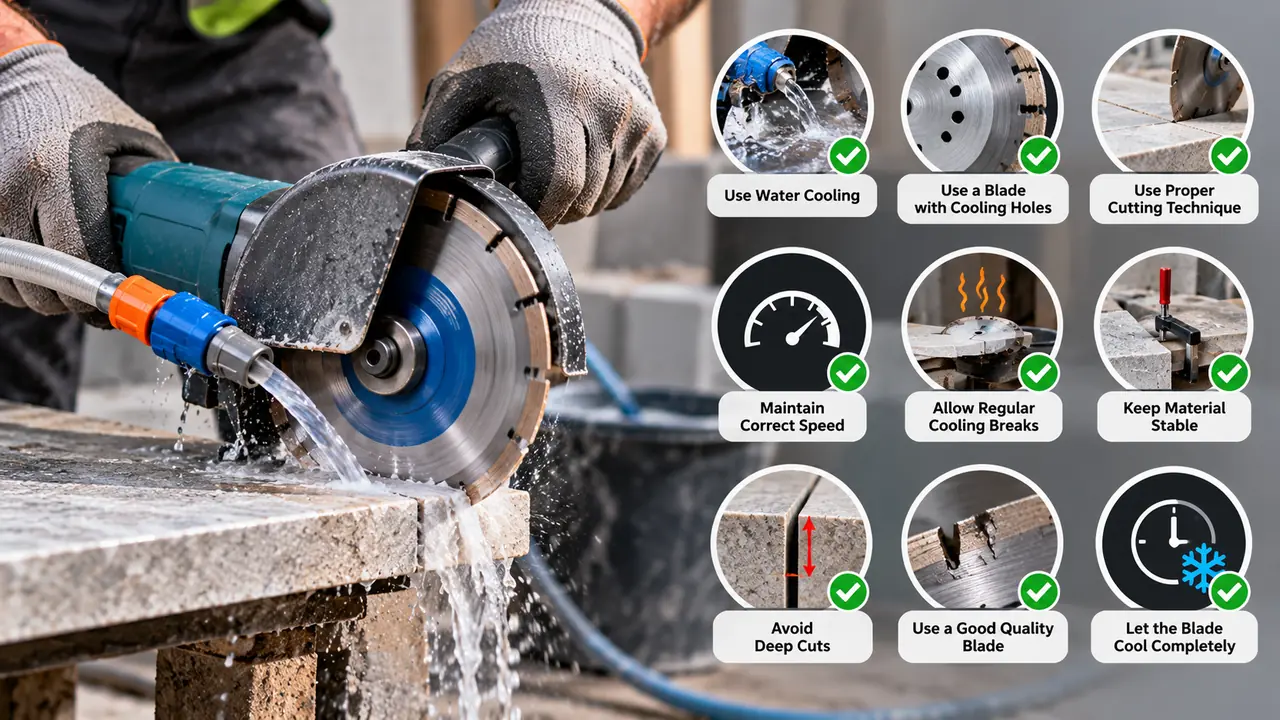
Diamond blades are designed to cut through concrete, asphalt, tile, and stone unlike standard abrasives that are designed for softer materials. However diamond blades need to be protected from overheating due to the grinding action.
Overheating the blade can cause blade warping, increase the risk of damage and lead to inefficiency in cutting. Excessive heat can also cause burn marks and discolouration of the materials. In this blog, we explore how to keep the blade from overheating.
- Choice of blade
Firstly, choosing the correct blade plays an important role in preventing overheating.
Different blades are used for cutting different materials such as concrete, asphalt, granite and tile. The right choice of blade enhances performance and reduces friction. The type of material that needs to be cut dictates the choice of blade used. For example, wet cut diamond blade is used with concrete whereas a continuous-rim diamond blade may be the best choice for cutting tile.
Choice of appropriate blade prevents the risk of overheating and ensures efficiency.
2. Flow of water
Water is the most effective way to control heat. A consistent and adequate supply of flowing water ensures that the blade does not overheat. Water also prevents dust generated from flying around and keeps the surface clean. If the water supply is inadequate, the blade may be damaged and distort the quality of the cut. It helps to check that the water hose does not have any knots and the nozzle is unclogged so that consistent flow of water is maintained.
- Speed of the blade
The blade should be run within the specified range for the type of blade in use. Using the blade at either a lower or higher speed can affect the quality of the work and damage the blade. If the blade is used at a lower speed than specified, it may lead to vibrations and excessive friction and the surface may be cut unevenly. At a speed higher than the specified range the blade will overheat and cause a safety risk.
4. Application of pressure
Application of extra external pressure causes excessive friction and overheating that will damage the blade. The tool needs to operate without additional pressure for best performance of the blade. Additionally, continuous deep cuts without breaks when using a diamond blade for cutting are also a major cause of overheating and causing blade damage.
- Regular maintenance
After every use, clean the blade of any residue. Slurry, resin or any other residue should not be allowed to stay sticking to the blade. In case of persistent residue an effective and recommended solvent can be used to clean the blade. A clean blade will also not corrode easily.
Cracked edges and discoloration of the core are signs of overheating. Any cracks in the blade call for immediate replacement.
Diamond blades need to be dressed when soft metal glazes over the diamond edge. This can be achieved with the help of a dressing stone like one made from silicon carbide or other suitable agents. Keep the blades clean and dry and store properly when not in use.
Overheating is one of the main challenges when using diamond blades for cutting. Using proper cutting techniques and using water and air cooling techniques as required will ensure longevity and enhance efficiency.

 English